



National History
Phi Beta Sigma Fraternity, Inc. was founded at Howard University in Washington, D.C., January 9, 1914, by three young African-American male students.
The founders, Honorable A. Langston Taylor, Honorable Leonard F. Morse, and Honorable Charles I. Brown, wanted to organize a Greek letter fraternity that would truly exemplify the ideals of brotherhood, scholarship, and service.

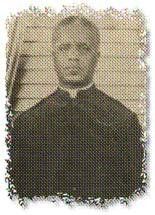
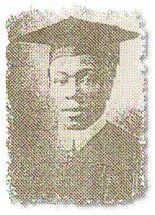
The founders deeply wished to create an organization that viewed itself as “a part of” the general community rather than “apart from” the general community. They believed that each potential member should be judged by his own merits rather than his family background or affluence…without regard of race, nationality, skin tone or texture of hair. They wished and wanted their fraternity to exist as part of even a greater brotherhood which would be devoted to the “inclusive we” rather than the “exclusive we”.
From its inception, the Founders also conceived Phi Beta Sigma as a mechanism to deliver services to the general community
Rather than gaining skills to be utilized exclusively for themselves and their immediate families, the founders of Phi Beta Sigma held a deep conviction that they should return their newly acquired skills to the communities from which they had come. This deep conviction was mirrored in the Fraternity’s motto, “Culture For Service, Service For Humanity.”
The History of Iota Tau
The Iota Tau Chapter of Phi Beta Sigma Fraternity Inc. was founded on October 1, 1976 by the Honorable Brothers John E. Quarry and Edward Herbert. Brothers Quarry and Hebert became the first Crescents to pledge at the Louisiana State University A&M College of Baton Rouge, and proudly bear the Phi Beta Sigma Shield and Greek letters. Under the guidance of the sisters of the Rho Epsilon Chapter of Zeta Phi Beta Sorority, the Rho Chapter of Phi Beta Sigma Fraternity located at Southern University and A&M College, and LSU faculty advisors, Brother Thomas Durant (PH.D Sociology), Official advisor of the new organization, Brother Linus Jack (PH.D History), and at that time (Brother Capt. Luke LaVergne Air force/ ROTC at LSU).
The Rho Epsilon chapter of Zeta Phi Beta Sorority played a very significant role in the establishment and formulation of Iota Tau chapter. The Zetas sponsored and held the first organizational meeting at LSU to introduce students to Phi Beta Sigma Fraternity and recruit the first line. At this meeting Brother Linus Jack spoke to the potential pledges. The Zetas would go on to be actively engaged in the pledging of this first line. The organization was officially recognized by LSU in the Spring of 1977.
Brother Edward Hebert wrote the first Constitution and submitted it to the University and Pan-Hellenic council in the spring of 1977 with four active members. The International Fraternity officially chartered the Iota Tau Chapter on May 10, 1978 listing four active brothers: John Quarry, Edward Hebert, Fred Lillie (Iota Tau’s 2nd Line)), and a Brother who transferred from LSU at Shreveport).
By the time the charter had been issued by the Fraternity and University, the Iota Tau chapter of Phi Beta Sigma had successfully pledged eight brothers: Brothers: John Quarry, Edward Hebert, Fred Lillie, Raymond Webb, Greg Hill, Kenneth Barnes, Pearson Jordan and Albert Simpson. Brother John Quarry did not appear on the charter because he had graduated from LSU by the time the charter was approved, and the charter only listed students who were presently enrolled at the university at the time of issuance.
The foundation had been set and the brothers of the Iota Tau chapter immediately began to observe and recruit young men who would embrace the Fraternity Ideals of Brotherhood, Scholarship and Service. Since that time, Iota Tau has proven itself to be a stellar chapter, upholding the name of Sigma with the utmost dignity and pride. These Brothers have affirmed themselves time and time again as a leading organization on the campus and a leading chapter in Sigma by winning awards and accolades for their Community Involvement, Campus Activities, High Academic Achievement and Dedication to “Culture for Service and Service to Humanity”.